“The most wonderful thing about being Métis is that we come in all colours. My grandmother used to tell me that ‘Métis is how you feel’. I am now part of the culture and have a strong sense of belonging.”

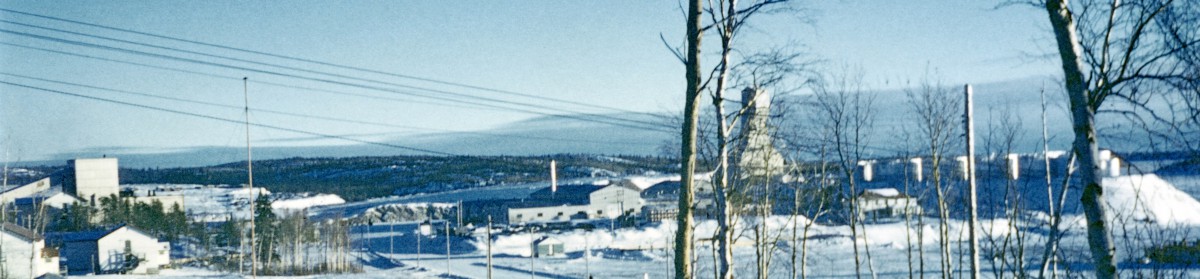
In 1957, one of Canada’s famed Group of Seven painters, A.Y. Jackson, made a surprise visit to the small uranium mining town of Gunnar Mines, on Lake Athabasca in Saskatchewan. He made a few appearances at the local Handicraft club where he gave painting exhibitions and suggestions to the members. Donna Lee was a member of this group and remembers him as being quite blunt, even caustic at times while reviewing paintings. One afternoon, when the club’s members were invited to accompany him on a painting excursion on the rocks, Jackson motioned to her to sit beside him. While they painted, he gave her little tips, such as “use a bigger brush” and “put these little strokes through the water.”
This was a key event in Donna Lee’s artistic career. She would likely have become an artist in any event, following in the footsteps of her talented mother Mae, but Jackson’s encouragement sparked a greater confidence. She sold her first paintings to residents of Gunnar and her career has now spanned more than fifty years.
Donna Lee is a Saskatoon-based artist and she derives much of her inspiration from her experiences of northern landscapes, in Manitoba, the Lake Athabasca region, the Yukon, and northern Ontario. It is, however, the rich heritage and culture that she learned as a child from her Métis grandmother and father which form the foundation of Donna Lee’s work, not only as an artist but also as a teacher and author.
Once Donna Lee’s children were older, she went to university where she obtained a Bachelor of Fine Arts and Bachelor of Education. An early teaching position was in La Loche, Saskatchewan, which has been in the news recently because of a tragic incident. Although much of the current news from La Loche is negative, Donna Lee’s memories are of the many good things that happened while she lived and taught in the community. There she met Suzanne, a Dene woman who became a lifelong friend. Suzanne gave her many beaded pieces done in the Dene tradition, which set Donna Lee on a path of doing her own beadwork. She also learned enough Dene to be able to talk to the elders.
For three or four years, she taught art in the school then switched to working with high-risk students, many of whom were Métis. She related well to the kids and her work with them brought her great joy. “I had a very good relationship with them and they were good for me. So many have gone on to university. I feel so proud of them and am still in touch with many,” she says. “They cared about me because I absolutely cared about them.” In 2003, Donna Lee was acclaimed as an Educator of Distinction by the Saskatoon Preschool Foundation for her work in education.
The time in La Loche brought Donna Lee closer to her roots. Donna Lee says, “The most wonderful thing about being Métis is that we come in all colours. My grandmother used to tell me that ‘Métis is how you feel’. I am now part of the culture and have a strong sense of belonging.”
Her beading enabled her to participate in “Walking with My Sisters,” a renowned art project organized by artist Christi Belcourt to commemorate the Missing and Murdered Indigenous Women in Canada and the United States. Men and women from all over North America answered Ms Belcourt’s call to create moccasin tops (called vamps). Each pair of vamps represents the unfinished moccasins that will never be worn by a missing and murdered woman.
Donna Lee contributed a pair of vamps in honour of a friend, Dahlene Bosse, a member of the Onion Lake Reserve, who was going to go to university. They met when Dahlene became engaged to Donna Lee’s ex-students. The couple married and had a child. One day Dahlene left to go out with friends and never came home. The commemorative exhibit is touring North America and is booked until 2019.
Stay tuned for a second article about Donna Lee’s painting and writing.


 Pen to Paper