I sat up in bed, grabbed a pen and paper off the table and began to write:
It was all vaguely the same and yet different. A glorious sunny day that felt like spring because there was a warmth to the air and the only snow huddled in crevices on the ground.
I walked past the mine buildings that were jumbled together like some crazy puzzle, but still standing. It seemed that people still might be living there because the town didn’t look deserted. I went downhill, then along the road uphill again to the community centre. There was a convention of sorts going on in the community centre and hundreds of people were sitting in the big hall listening. At the end of the session, people were exiting into the main part of the building and I was trying to stop them, trying to find someone who knew anything about Gunnar.
I kept saying to people, “I used to live in Gunnar.” Finally one woman stopped and I tried to write down my email address for her on a piece of paper but the ink was running out. The words kept changing their size and wouldn’t fit in the space. The ones that were on the page were illegible.
I moved on to a man who was there with his family and I asked what brought him to Gunnar. He said that he and his brother were looking to buy the mill and maybe move it somewhere else. He started walking away and I turned in the other direction. Then I thought, “Oh great, I didn’t get his business card with his contact information,” and I turned back but couldn’t see him or his wife and kids. I went running down one of the hallways (there were many more in the dream than in reality) but one corner was very recognizable because I skidded around it on the slippery floor.
After much searching I gave up and went outside. I walked to where there was a small bay. There were many people around. A flying craft buzzed overhead and came to an abrupt landing mere feet in front of me. It didn’t taxi in, just dropped down. It looked more like some fantastic mechanical flying insect than a plane. All its paint was gone and its fuselage was a dull brown as if covered with dry mud.
The pilot jumped down. It was a woman dressed head to toe in a flying suit of the same dull brown colour. She was wearing one of those old war-time airman’s hats with its brim low over her forehead and the flaps pulled down over her ears.
I said to her, trying to make conversation and also because I was curious, “What kind of a plane is that?”
She looked briefly, scornfully, at me and said, “Does that look like any kind of a plane to you?” Then she turned her back to me, pulled a flask out of her hip pocket, took a swig and offered it to someone who she obviously knew and who had been standing behind her.
…
Aside from being fodder for a bored psychoanalyst, this is when you know that maybe you have been working too hard on your project. Or, just perhaps, Gunnar does live on.
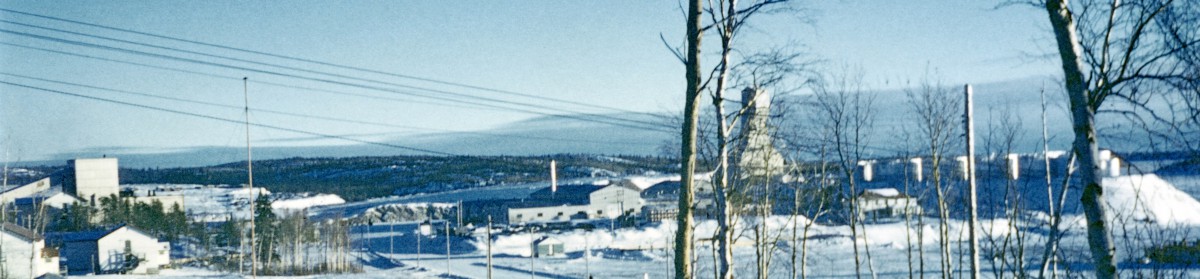
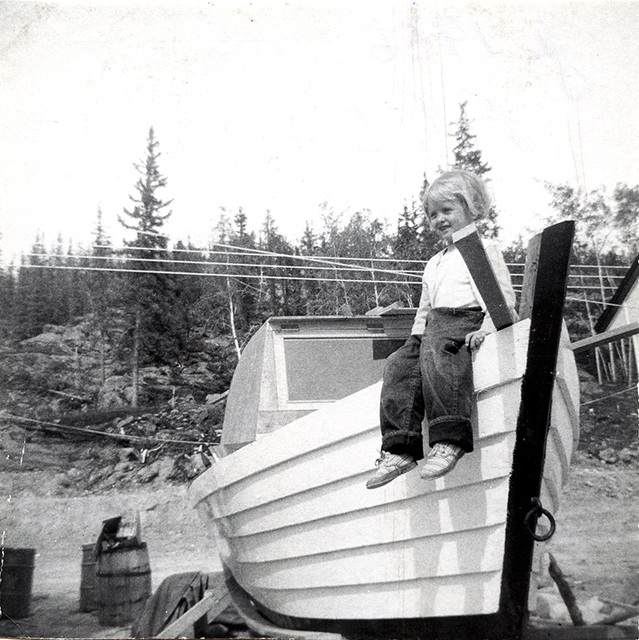
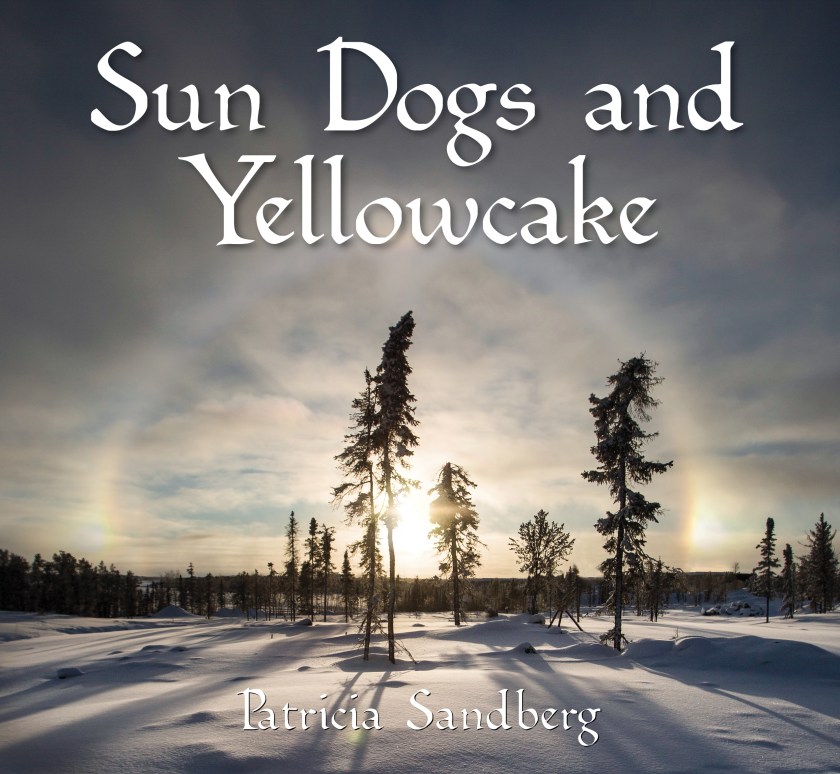 Gilbert LaBine’s first uranium mine helped end the Second World War. His next fed the Cold War. Immigrants fleeing post-war Europe and job-seeking southerners came to Gunnar Mines in northern Saskatchewan, joining the area’s First Nations and Métis. They found adventure, romance, tragedy, and a freedom never again to be equaled. Meanwhile, lamps made of uranium drill core sat in their homes and their children played at the tailings pond. Sun Dogs and Yellowcake is their story.
 Pen to Paper